
know what your collateral is actually worth if you had to sell it.
shoalfi publishes how much of a token can really be sold, and ranks every market by how much has been lent against it.

last week of august 2026
three protocols, one week, same attack.
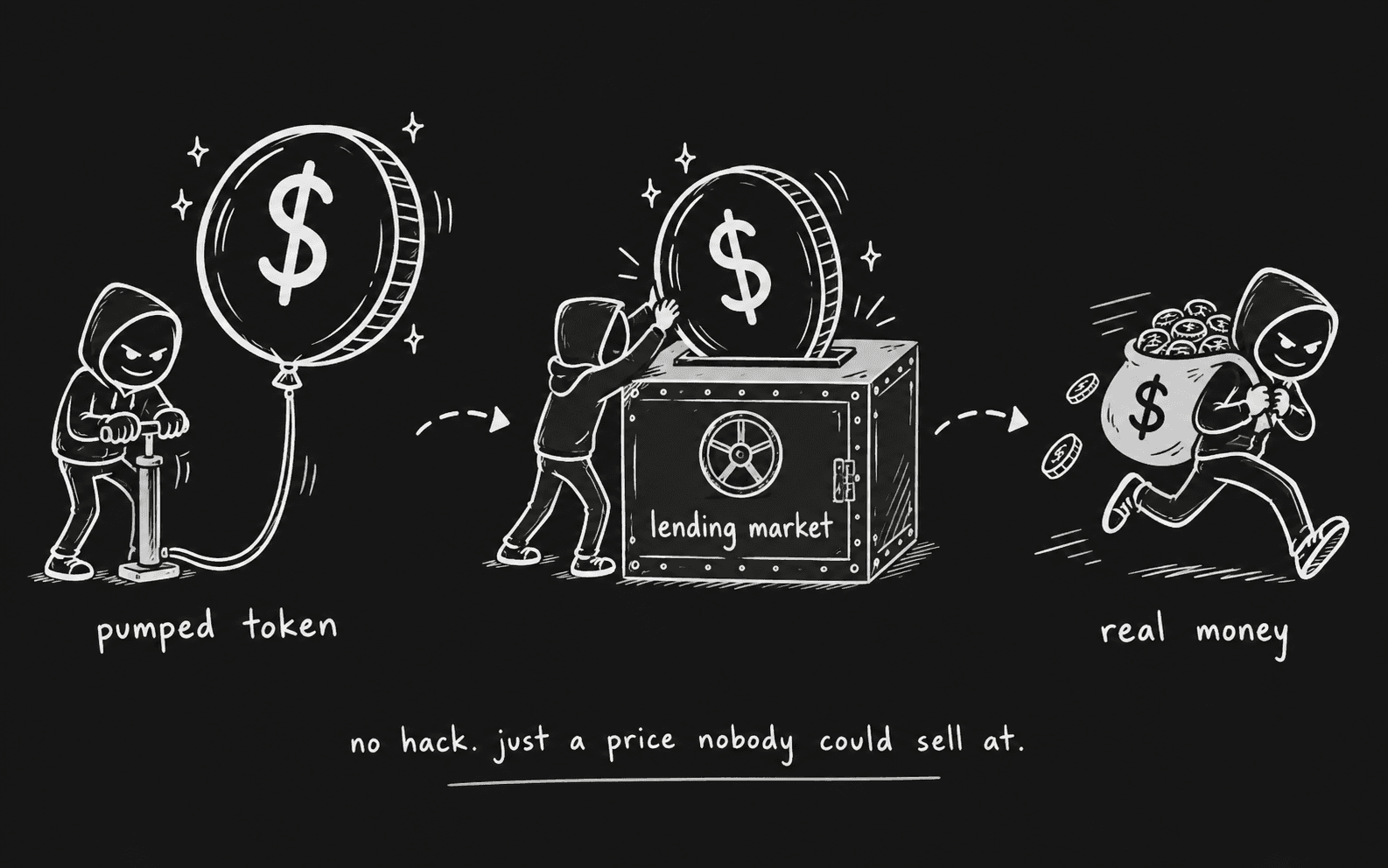
pump a token nobody trades. post it as collateral at the inflated price. borrow real assets. leave. the protocol never asked how much of that token could actually be sold.
- aug 30

tectonic
~$75m
TONIC pumped ~100x in 20 minutes, borrowed against it. cronos halted the chain.
- aug 27

moonwell
$8.7m
MAMO pumped ~8× across two thin pools, then used as collateral on base.
- aug 25

morpho
$36.4m liquidated
a $320k trade in a thin pendle pool moved PT-reUSD 3%. $67.5m of collateral sat behind a $9m pool.
aave pays risk firms to watch for it. the other couple hundred lending markets have nothing.
how it works
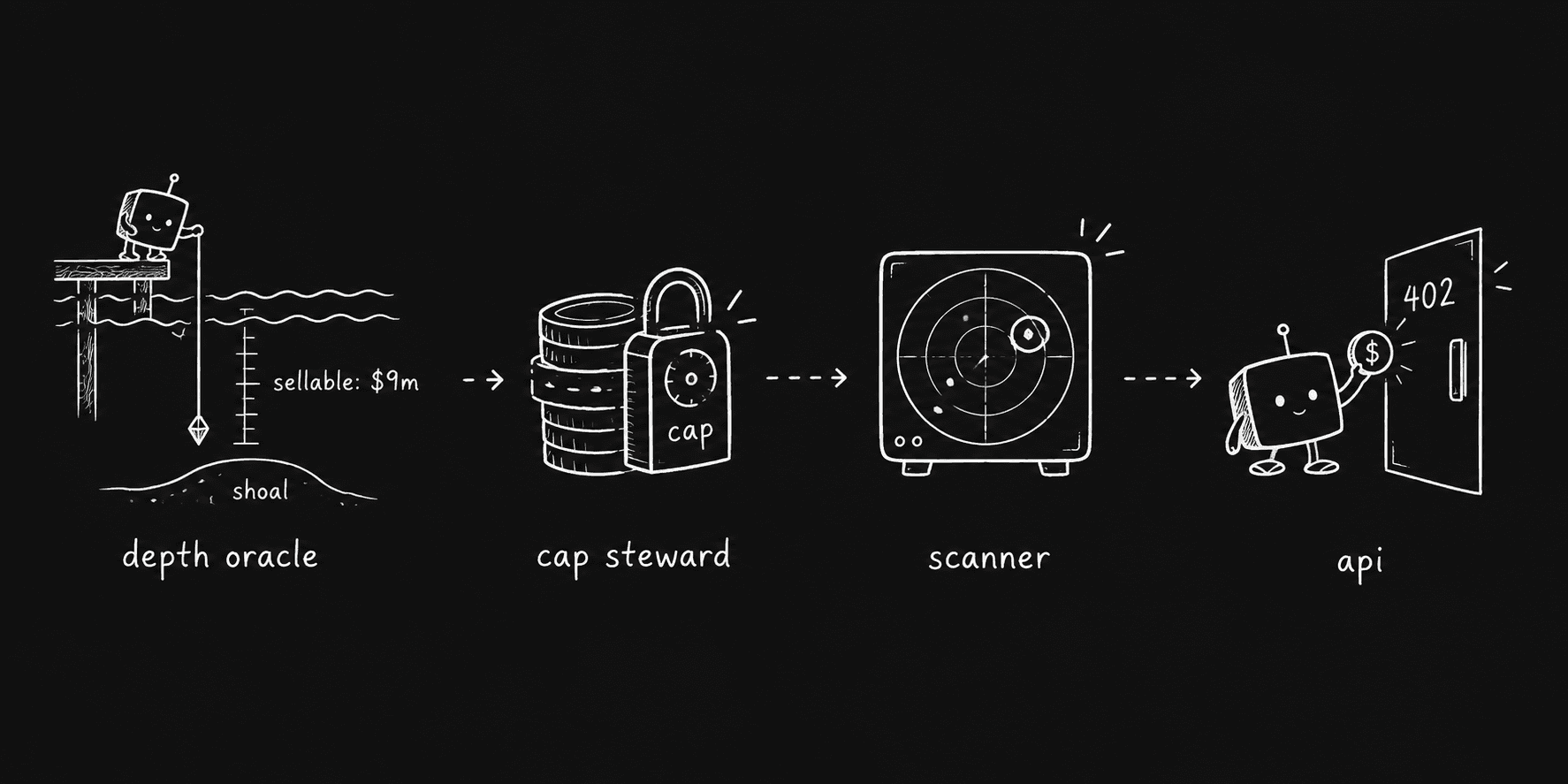
two numbers, one plug-in.
- 01
depth oracle
how much usd you could sell right now within a 10% move, from uniswap v3 pool ticks via the graph.
- 02
cap steward
roadmaproadmap: an on-chain cap that turns a signed depth snapshot into a max borrowable amount. compiled and tested, not deployed.
- 03
scanner
every collateral market we can index, ranked by how much is lent vs how much could actually be sold.
- 04
ask in plain english
a natural-language interface over the live data via the graph's subgraph mcp.
demo
see what your collateral is actually worth.
a live scanner over compound v3 and morpho blue collateral, ranked by how much is lent vs how much could be sold on uniswap v3. plus the numbers from the august incidents.
honest limits
what it doesn’t do.
it won’t save a market from a flash crash or from bad debt caused by honest volatility. it measures one thing, the gap that keeps getting exploited, for everyone gauntlet and chaos labs don’t cover.


team
built at ethonline 2026


FAQ
questions, answered.
no. a price feed tells you what one token trades at. shoalfi tells you how much of it you could actually sell.